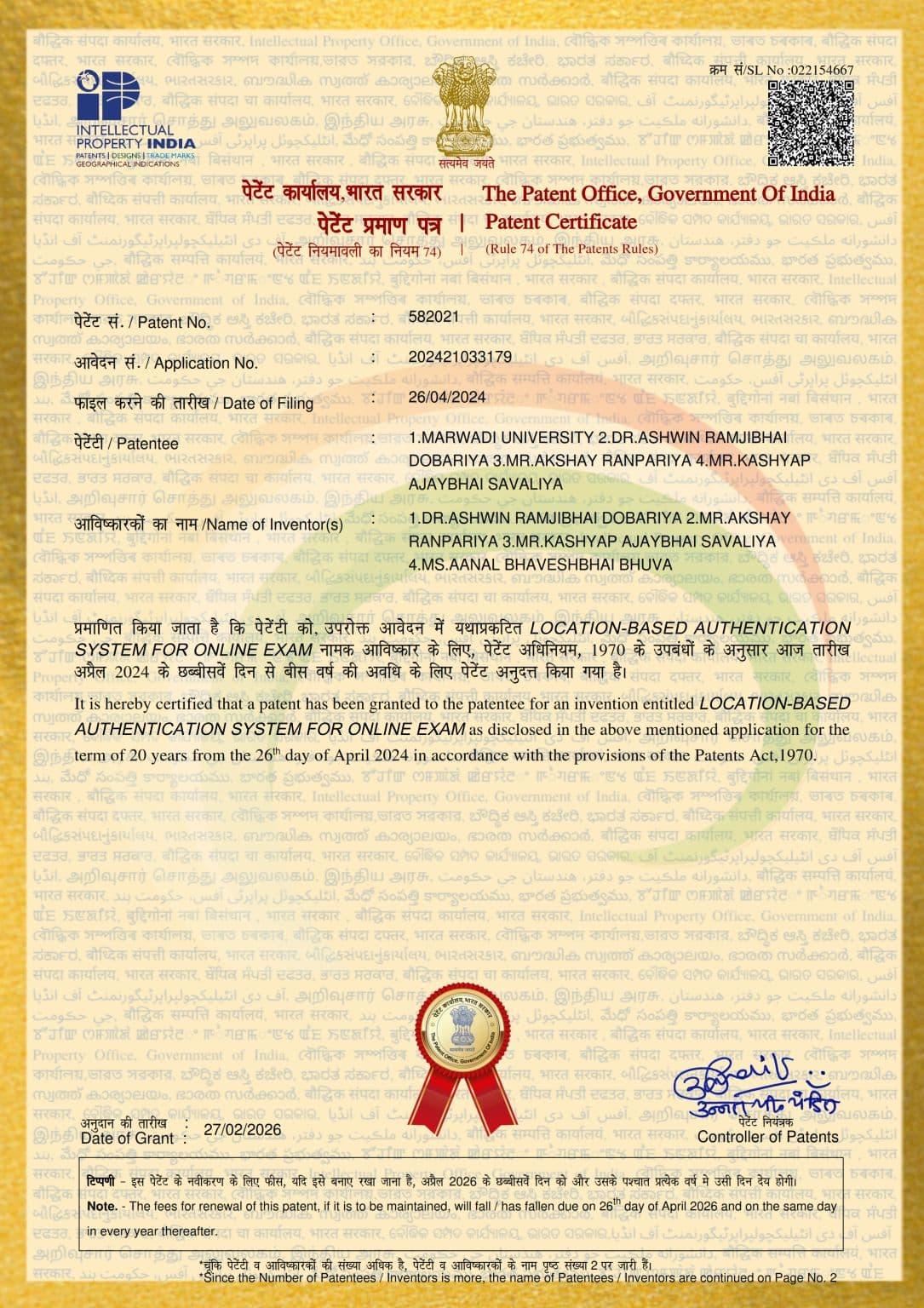
Case study · Patent No. 582021
The Story Behind My First Patent
A GPS-Based Solution to Secure Classroom Exams
One of the most memorable moments of my bachelor's degree wasn't building an app - it was solving a real problem faced by the faculty at my university.
A Real Problem From Our Faculty
Our Dean and Heads of Department shared a challenge with everyone.
Faculty members regularly conducted monthly class tests using Google Forms. The problem was that the Google Form link was usually shared in the class WhatsApp group, which meant anyone with the link could open it. Students who weren't physically present in the classroom could still attempt the exam from home, and sometimes classmates would even forward the link to absent friends.
This made it difficult to ensure that only students inside the classroom were taking the test.
Instead of treating it as just another college assignment, I decided to build a practical solution.
Understanding the Problem
The goal was simple: only students who were physically present inside the classroom should be able to access the exam.
The challenge was achieving this without modifying Google Forms itself.
Building the Solution
Instead of changing Google Forms, I designed a GPS-based wrapper that protects Google Forms using location verification.
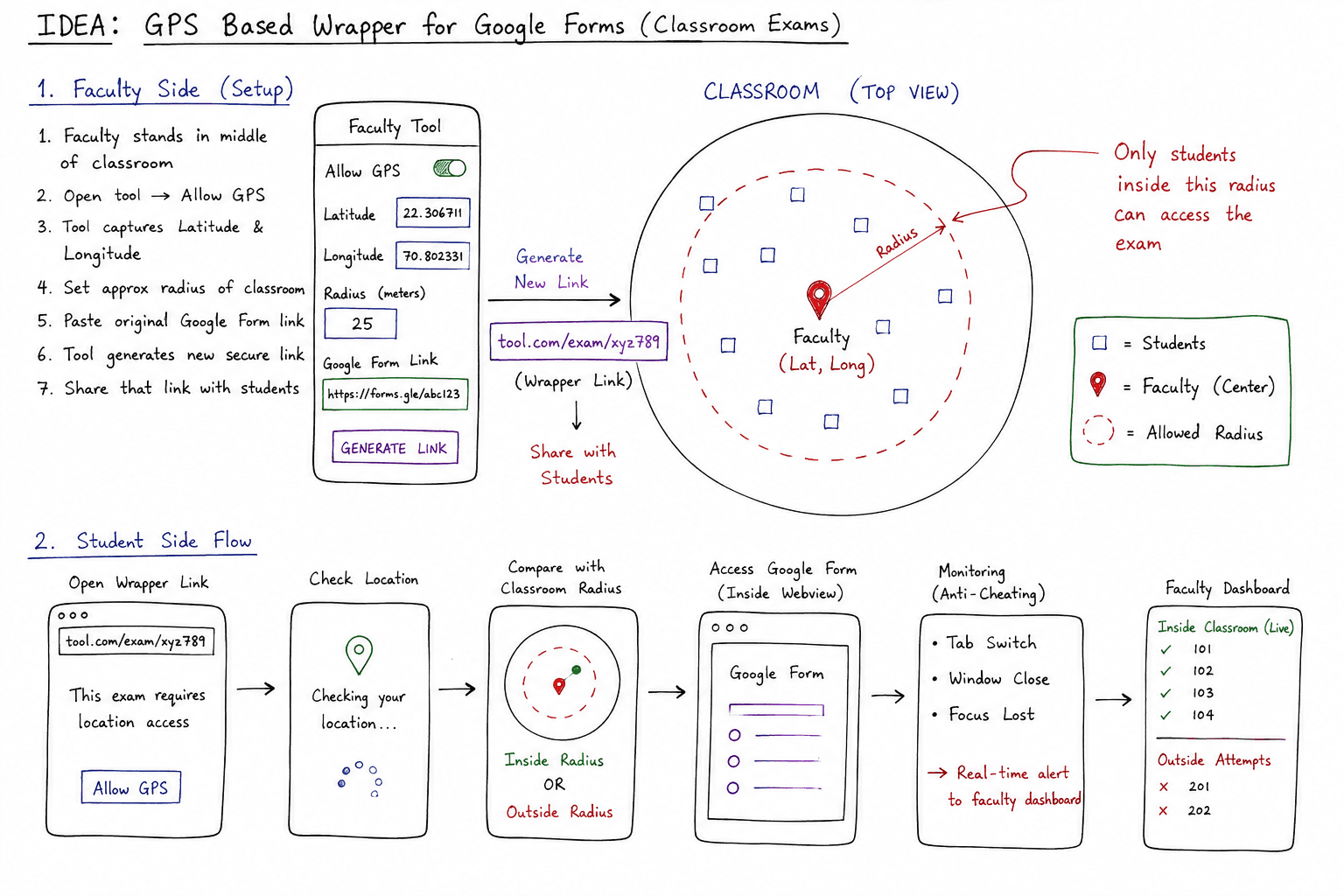
Here's how the system worked. Before starting an exam, the faculty member would:
- Stand in the middle of the classroom.
- Open the tool and allow GPS access.
- Register the classroom's latitude and longitude.
- Set an approximate radius covering the classroom.
- Paste the original Google Form link.
The system would then generate a brand-new secure link. This new link acted as a wrapper around the original Google Form, and this was the only link shared with students.
Student Experience
When students opened the generated link, they first had to allow GPS access. The system compared the student's current GPS coordinates with the registered classroom location and radius.
- If the student was inside the allowed classroom area, the Google Form opened inside the application using an embedded WebView, and they could continue with the exam.
- If the student was outside the classroom, access to the exam was blocked. The attempt was recorded, and the faculty dashboard showed which students were inside the classroom and which were attempting to access the exam from outside.
Preventing Cheating
I also built a real-time activity tracker.
If a student switched browser tabs, minimized the browser, or closed the exam window during the test, the system immediately detected the event and notified the faculty dashboard in real time. This helped teachers identify suspicious behavior and reduce opportunities for cheating during the exam.
The Outcome
I presented the prototype to our Dean and Heads of Department. They appreciated both the practicality of the solution and the technical approach, and the university decided to file it as a patent with the Government of India.
The invention was later granted as Patent No. 582021, making it the first patent of my career.
Being recognized by the Dean, HODs, and senior faculty for solving a real-world problem was one of the proudest moments of my college journey. More than the patent itself, it taught me something valuable: I enjoy building products that solve real problems - not just writing code.